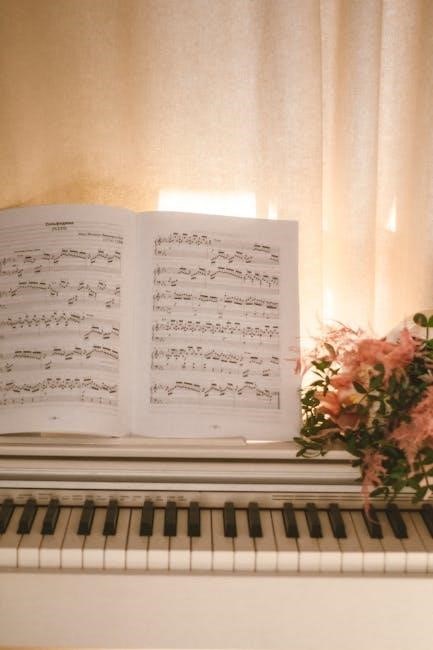
Liebestraum PDF: A Comprehensive Guide (Updated 04/08/2026)
Pianocoda offers high-quality PDF editions of Liebestraum, personally engraved for readability. Explore various PDF arrangements, considering quality and ensuring clear sheet music access.

What is Liebestraum?
Liebestraum, meaning “Dream of Love” in German, refers to a set of three solo piano compositions penned by the Hungarian virtuoso Franz Liszt (S.541). However, Liebestraum No. 3 in A-flat major is overwhelmingly the most celebrated and frequently performed piece within the collection. Finding a reliable Liebestraum PDF is a common pursuit for pianists eager to tackle this iconic Romantic work.

The piece embodies the essence of Romantic-era musical expression, characterized by its lyrical melodies, rich harmonies, and evocative atmosphere. Many seek sheet music in PDF format for convenient practice and study. Understanding the piece’s emotional depth is crucial, and access to a well-engraved PDF score aids in interpretation.
Historical Context of Liebestraum No. 3
Composed in 1850, Liebestraum No. 3 emerged during a period of significant artistic and social change. Liszt dedicated the piece to his patron, Count Adolphe de Flers. It quickly gained popularity, becoming a staple of the Romantic piano repertoire. The availability of Liebestraum PDF scores today reflects its enduring appeal.
Interestingly, the work initially appeared as the second piece in a set, later rearranged. The search for a quality PDF often stems from its frequent inclusion in piano examinations and recitals. Access to accurate sheet music, ideally in PDF format, is vital for preserving the integrity of Liszt’s original intent.
Franz Liszt: The Composer
Franz Liszt (1811-1886) was a Hungarian composer, virtuoso pianist, conductor, and teacher—a towering figure of the Romantic era. His innovative piano techniques profoundly influenced subsequent generations. Finding a reliable Liebestraum PDF allows modern pianists to explore his genius. Liszt’s compositions often pushed the boundaries of harmonic and structural conventions.
He was a pioneer of the symphonic poem and a master of the piano transcription. The accessibility of sheet music in PDF format has democratized access to his works. Studying Liszt’s style through a Liebestraum PDF reveals his lyrical sensibility and technical brilliance, essential for performance.
Understanding the Structure of Liebestraum No. 3
Liebestraum No. 3 in A-flat major is structured as a free-form rhapsody, not adhering to strict classical forms. A readily available Liebestraum PDF reveals its ternary (ABA) structure, though fluid and interwoven. The opening A section presents the iconic, lyrical melody. The contrasting B section introduces a more agitated, passionate character.
Returning to the A section, the initial melody is embellished and expanded. Analyzing a PDF score highlights Liszt’s use of thematic transformation. Understanding this structure aids interpretation and memorization. Accessing a clear sheet music PDF is crucial for grasping these nuances.
Key Musical Elements
A Liebestraum PDF reveals the piece’s core elements: lush harmonies, a soaring melody, and delicate rhythmic interplay. The harmonic language is richly Romantic, employing chromaticism and unexpected modulations. The melody, the heart of the piece, demands expressive phrasing. Examining a sheet music PDF shows Liszt’s use of “small note” notation for softer accompaniment, similar to Chopin’s Etude Op. 25 No. 1.
Rhythmically, the piece feels fluid, though precise execution is vital. A well-prepared PDF score will aid in understanding these subtleties. Dynamics and articulation are paramount, creating a “conversation” between hands.
Melody and Harmony
A Liebestraum PDF showcases a profoundly lyrical melody, the emotional core of the work. The harmony is richly chromatic, characteristic of the Romantic era, and supports the melody’s expressive arc. Analyzing the sheet music PDF reveals how Liszt uses harmonic suspensions and resolutions to heighten emotional impact.
The melody requires careful phrasing and dynamic control to truly sing. The harmony, while complex, should never overshadow the melodic line. A clear PDF score allows for detailed study of these interactions, revealing Liszt’s masterful harmonic language and melodic invention.
Rhythm and Tempo

Examining a Liebestraum PDF reveals a flexible rhythmic structure, demanding nuanced interpretation. While a steady tempo is crucial, the melody should dictate the rhythmic feel, not technical convenience. Metronome practice, even 20% faster than the target tempo, aids in achieving rhythmic security and ease.
The sheet music PDF doesn’t always explicitly convey the subtle rubato inherent in Romantic performance practice. Careful study and listening to recordings are essential. A well-prepared PDF allows for detailed rhythmic analysis, ensuring a musically convincing and emotionally resonant performance.
Dynamics and Articulation
A Liebestraum PDF score reveals dynamic markings crucial for expressive playing. The melody must prominently stand out, achieved through careful articulation and contrasting dynamics. Practice the melody separately, focusing on phrasing, before integrating it with the accompaniment.
The sheet music PDF may utilize “small note” notation for softer accompaniment figures, similar to Chopin’s Etude Op. 25 No. 1. Mastering this distinction—loud melody, quiet accompaniment—is key. Analyzing a high-quality PDF allows for precise interpretation of these subtle nuances, enhancing the piece’s lyrical quality.
Finding Liebestraum PDF Sheet Music
Locating a reliable Liebestraum PDF requires careful consideration. Numerous online sources offer sheet music, ranging from free options to paid, professionally engraved editions. Pianocoda stands out, with Juan Antonio González personally reviewing each piece for readability before exporting high-quality PDFs.
When choosing a PDF, prioritize quality. Ensure the engraving is clear, and the markings are legible. Free sheet music may contain errors or poor formatting. Paid options often provide more accurate and aesthetically pleasing scores, enhancing the learning and performance experience. Always verify the source’s reputation.
Reputable Online Sources for PDF Scores

Several online platforms offer Liebestraum PDF scores, but reliability varies. Pianocoda, created by Juan Antonio González, is highly recommended due to its commitment to quality engraving and personal review of each piece. This ensures a readable and accurate PDF.
Musicnotes.com and SheetMusicPlus are also popular choices, providing a wide selection, though quality can differ between arrangements. IMSLP (International Music Score Library Project) offers public domain scores, but these may lack modern editing. Always preview the PDF before purchasing to assess its clarity and accuracy for optimal learning.
Free vs. Paid PDF Sheet Music Options
While free Liebestraum PDF scores are available on sites like IMSLP, they often lack the editorial refinement found in paid versions. These free options may contain inaccuracies or poor engraving, hindering learning. Paid PDFs, like those from Pianocoda, prioritize readability with personally engraved scores.
Investing in a quality PDF ensures a clear and accurate representation of Liszt’s composition. Platforms like Musicnotes.com and SheetMusicPlus offer paid options with varying levels of editing. Consider the trade-off between cost and quality when choosing; a well-prepared score significantly aids progress.
Quality Considerations for PDF Scores
When selecting a Liebestraum PDF, prioritize readability above all else. Clear engraving, with easily distinguishable notes and markings, is crucial for effective learning. Avoid scores with blurry images or inconsistent formatting. Pianocoda editions emphasize this, with Juan Antonio González personally reviewing each piece.
Consider fingerings and pedal markings – are they thoughtfully included? A high-quality PDF will offer helpful suggestions, not just a bare-bones transcription. Ensure the score accurately reflects the musical intent, avoiding errors that could impede your interpretation. A well-prepared score is an investment in your musical journey.
Technical Challenges in Playing Liebestraum
Liebestraum No. 3 presents unique technical hurdles for pianists. The flowing arpeggios in the left hand demand dexterity and evenness, requiring a “floating” wrist and arm weight for control. Simultaneously, the right hand must deliver a lyrical, expressive melody. Coordination is paramount – it’s a delicate “conversation” between hands.
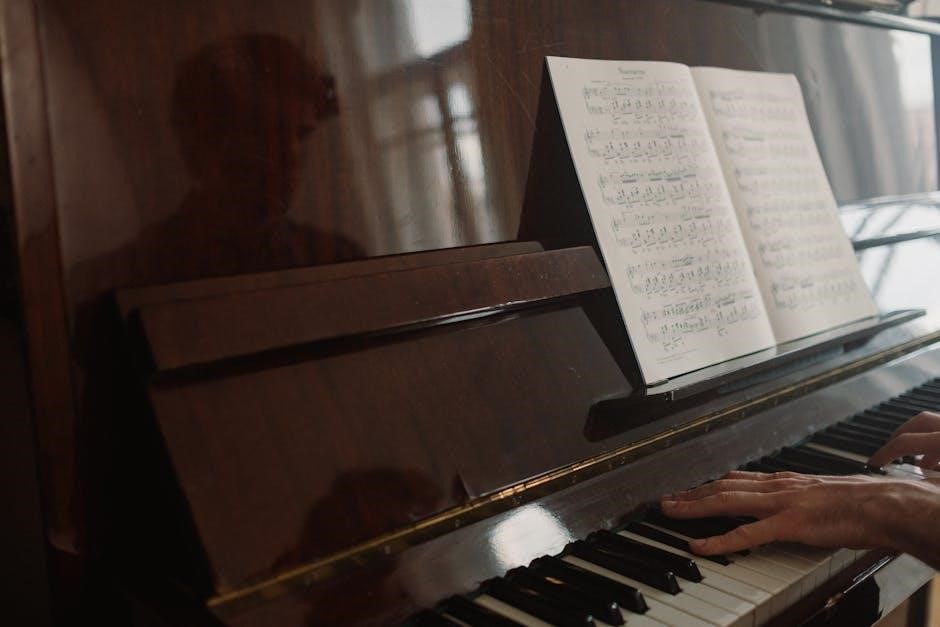
Mastering the rhythm, beyond mere technical convenience, is vital; the melody should dictate the tempo. Practice with a metronome, even faster than your target speed, to build comfort. Articulation is key to making the melody sing, contrasting it with the softer accompaniment.
Left-Hand Technique and Arpeggios
The left-hand arpeggios in Liebestraum are foundational, demanding a relaxed yet controlled technique. Focus on a “floating” wrist, allowing the arm weight to drive the sound, rather than relying on finger strength. Maintaining evenness across the arpeggios is crucial, avoiding rushed passages or uneven dynamics.

Visualize the arpeggios as a supportive backdrop, never overpowering the melody. Practice slowly, concentrating on clarity and consistency. Consider the “small note” notation sometimes used in scores to indicate softer accompaniment, ensuring the left hand remains subtle and complementary.
Right-Hand Melody and Phrasing
The right-hand melody in Liebestraum is paramount, requiring careful attention to phrasing and articulation. Practice the melody independently, focusing on a singing tone and expressive shaping. Emphasize its prominence, creating a clear distinction from the accompanying arpeggios.
Strive for a lyrical quality, allowing the melody to “breathe” with natural pauses and dynamic variations. Experiment with different articulations – legato, staccato, and accents – to enhance its emotional impact. Remember, the melody dictates the rhythm, so prioritize musicality over technical convenience when choosing tempo.
Coordination Between Hands – The “Conversation”
Liebestraum presents a unique challenge: an inverted relationship between the hands. Shift your focus away from the right hand, allowing it to simply “breathe” and stretch its phrases. Instead, consider how the left-hand notes fit within the parentheses created by the right-hand melody.

Visualize a delicate conversation unfolding between the hands, each complementing the other’s story. The left-hand arpeggios aren’t merely accompaniment; they are integral to the narrative. Mastering this interplay requires mindful practice and a willingness to prioritize the left hand’s contribution to the overall musical texture.
Improving Your Liebestraum Performance
To elevate your Liebestraum performance, focus on fluidity and musicality. Allow your wrist to “float” slightly, utilizing arm weight for a richer tone. Practice with a metronome, initially 20% faster than your target tempo, to build comfort and precision.
Articulate the melody with clarity, practicing it separately with correct fingering. Then, integrate accompaniment, dramatically contrasting dynamics – a loud melody over a quiet background. Explore “small note” notation (as seen in Chopin’s Etude Op. 25 No. 1) to visually represent softer accompaniment passages within your PDF score.
Wrist Movement and Arm Weight
Achieving a beautiful Liebestraum tone hinges on balanced technique. Avoid rigidity; instead, encourage a gentle “floating” motion of the wrist. This allows for greater flexibility and prevents tension. Crucially, supplement wrist movement with weight from your arm – don’t rely solely on finger strength.
Think of your arm as the primary source of power, guiding the keys with a relaxed, yet controlled, descent. This approach, visible in high-quality PDF sheet music analysis, unlocks a richer, more resonant sound. Experiment with varying arm weight to shape phrases and dynamics effectively.
Metronome Practice for Rhythm
Mastering Liebestraum’s rhythmic nuances requires diligent metronome work. Begin by setting the metronome 20% faster than your target tempo. This initially uncomfortable pace forces precision and reveals rhythmic insecurities within the PDF sheet music.
Gradually decrease the tempo to your desired speed, maintaining the established accuracy. Focus on internalizing the pulse, ensuring the melody dictates the rhythm, not technical convenience. Consistent practice with a metronome, referencing a clear PDF score, builds a solid rhythmic foundation, essential for a compelling performance.
Bringing Out the Melody – Articulation Techniques
To truly capture Liebestraum’s emotional depth, prioritize melodic clarity when reading the PDF sheet music. Practice the melody independently, focusing on phrasing and fingering. Then, integrate accompaniment, deliberately exaggerating the dynamic contrast – melody loud, accompaniment soft.
Experiment with articulation; legato for lyrical passages, subtle staccato for emphasis. Pay attention to “small note” notation (like in Chopin’s Etude Op. 25 No. 1), indicating softer, background figures within the PDF. This technique enhances the melody’s prominence, creating a captivating and expressive performance.
Specific Performance Tips
When interpreting Liebestraum from a PDF score, emphasize the melody’s prominence above all else. Utilize the “small note” notation often found in Romantic-era pieces – a visual cue to play accompanying figures softer, creating textural depth.
Counterintuitively, shift your focus away from the right hand. Allow the melody to “breathe” and stretch naturally. Consider the left hand as the foundational element, framing the right-hand phrases within its harmonic context. View the performance as a delicate conversation, each hand complementing the other’s story, embodying the piece’s “love dream” essence.
Emphasis on the Melody’s Prominence
When working with a Liebestraum PDF, prioritize making the melody truly sing. Practice the melodic line separately, focusing on consistent fingering and expressive phrasing. Then, integrate it with the accompaniment, deliberately exaggerating the dynamic contrast. Aim for a significant volume difference – melody loud, accompaniment soft – to establish clear hierarchy.
Remember, the rhythm should serve the melody, not the other way around. Metronome practice, slightly faster than your target tempo, builds comfort and allows for nuanced rhythmic interpretation. This ensures the melody dictates the musical flow, creating a captivating and emotionally resonant performance.
Utilizing “Small Note” Notation for Accompaniment
Many Liebestraum PDF scores employ “small note” notation within the arpeggiated accompaniment, visually indicating a softer dynamic and secondary importance. This technique, observed in pieces like Chopin’s Aeolian Harp Etude, subtly differentiates the supporting harmony from the primary melodic line. While not a formally defined term, score editing software often labels this as simply “small note.”
Recognizing and interpreting this notation is crucial when studying a Liebestraum PDF. It guides your touch, encouraging a lighter, more delicate approach to the accompaniment, allowing the melody to truly blossom and resonate. This nuanced approach enhances the piece’s lyrical quality.
Focus Shift: Prioritizing the Left Hand
A counterintuitive yet effective performance strategy for Liebestraum, as highlighted in performance reviews, involves shifting primary focus away from the traditionally dominant right-hand melody. Instead, concentrate on the left-hand arpeggios, perceiving them as the foundational narrative.
View the right hand as providing melodic breath and phrasing, stretching across the harmonic landscape created by the left. This “inverted stance” fosters a delicate “conversation” between the hands, mirroring the piece’s romantic essence – a love song where each hand complements the other’s story. Studying a Liebestraum PDF with this mindset unlocks deeper expression.
Analyzing Different Liebestraum Editions
When sourcing a Liebestraum PDF, comparing editions is crucial. Pianocoda editions prioritize readability through personal engraving and review, ensuring a high-quality sheet music experience. However, numerous arrangements exist. Assess the engraving clarity – are notes distinct, and is the layout logical?
Consider the source’s reputation; reliable providers offer accurate transcriptions. Some editions utilize “small note” notation for accompaniment, visually indicating softer dynamics, similar to Chopin’s Etude Op. 25 No. 1. Prioritize editions that enhance musical understanding and facilitate a fluent performance, not just provide a PDF.
Pianocoda Editions and Their Features
Pianocoda distinguishes itself by offering meticulously crafted Liebestraum PDF editions. Juan Antonio González, the editor and creator, personally engraves and reviews each piece before publication. This dedication ensures exceptional readability, a critical factor for complex scores like Liebestraum. Each edition is exported as a high-quality PDF, optimized for clear printing and digital viewing.
Beyond basic transcription, Pianocoda focuses on musicality in its engraving. The aim is to present the sheet music in a way that supports expressive interpretation, aiding pianists in conveying the piece’s romantic essence. This commitment to quality sets Pianocoda apart.
Comparing Various PDF Arrangements
When sourcing a Liebestraum PDF, variations in arrangements are common. Some prioritize affordability, potentially sacrificing engraving clarity. Others may offer simplified versions, altering the original musical intent. Examining different editions reveals discrepancies in dynamics, articulation markings, and even note accuracy.
Pianocoda’s editions stand out due to their commitment to faithful reproduction and readability. Compare these to freely available PDFs; often, these lack the careful attention to detail found in professionally prepared scores. Prioritize editions that clearly indicate phrasing and utilize consistent notation for optimal learning.
Importance of Readable Sheet Music Engraving
The beauty of Liebestraum lies in its delicate nuances, easily lost with poor sheet music engraving. Cluttered layouts, inconsistent font sizes, or ambiguous markings hinder interpretation and slow learning. A well-engraved PDF prioritizes clarity, ensuring rests and stems are distinct, and dynamics are readily visible.
Pianocoda emphasizes this, with Juan personally reviewing each piece. Readable engraving isn’t merely aesthetic; it directly impacts your ability to accurately convey Liszt’s musical intentions. Investing in a high-quality PDF minimizes frustration and allows you to focus on musicality, not deciphering the score.
Liebestraum and Romantic Era Piano Music
Liebestraum No. 3 embodies the Romantic aesthetic, sharing characteristics with composers like Chopin and Schumann. Its lyrical melodies and expressive harmonies reflect the era’s emphasis on emotional depth and individual expression. Within Liszt’s broader oeuvre, Liebestraum showcases his mastery of creating evocative atmospheres and technically demanding passages.
The piece’s free-flowing form and rich textures are hallmarks of Romantic piano writing. Accessing a quality PDF allows deeper study of these elements. Understanding its context enhances appreciation, revealing Liebestraum as a quintessential example of Romantic piano literature.
Influence of Chopin and Schumann
Liebestraum No. 3 demonstrates clear influences from both Chopin and Schumann, key figures of the Romantic era. Chopin’s lyrical melodies and harmonic sophistication resonate within Liebestraum’s expressive lines, particularly in its delicate phrasing. Schumann’s penchant for evocative character pieces also informs Liszt’s approach, creating a narrative quality within the music.
Studying a detailed PDF score reveals these connections. The influence manifests in harmonic language and melodic contours. Accessing a high-quality sheet music PDF allows for comparative analysis, highlighting how Liszt synthesized these influences into his unique style.
Liebestraum’s Place in Liszt’s Oeuvre

Within Franz Liszt’s extensive and innovative body of work, Liebestraum No. 3 occupies a unique position. It represents a more accessible, lyrical side of the composer, contrasting with his famously virtuosic and often challenging compositions. A readily available PDF of the sheet music allows exploration of this stylistic contrast.
Despite its relative simplicity, Liebestraum showcases Liszt’s harmonic ingenuity and expressive depth. Examining a detailed PDF score reveals his masterful use of texture and dynamics. It’s a pivotal piece, demonstrating Liszt’s ability to blend technical brilliance with profound emotionality, solidifying its place within his oeuvre.
The Romantic Aesthetic in Liebestraum
Liebestraum No. 3 embodies the core tenets of the Romantic aesthetic: emotional intensity, subjective expression, and a fascination with the sublime. A readily accessible PDF of the sheet music allows for intimate study of these elements. The piece’s lyrical melody and rich harmonies evoke a sense of longing and idealized love, hallmarks of the era.
Liszt’s use of rubato and dynamic contrast, clearly visible in a detailed PDF score, further enhances the emotional impact. It’s a prime example of Romanticism’s emphasis on individual feeling and artistic freedom, making the PDF a valuable resource for understanding the period’s musical ideals.
Resources for Learning Liebestraum
Numerous online tutorials and lessons can aid in mastering Liebestraum, often referencing readily available PDF sheet music. Platforms offer guided practice and analysis, complementing the PDF score. Seeking a piano teacher specializing in Romantic repertoire is invaluable; they can provide personalized feedback and interpretative guidance.
Exploring recordings of renowned performances – often linked to PDF resources – offers insights into phrasing and dynamics. Websites like Pianocoda provide meticulously engraved PDF editions, enhancing readability. Utilizing these resources alongside a quality PDF will accelerate your learning journey and deepen your appreciation.
Online Tutorials and Lessons
A wealth of online tutorials and lessons are dedicated to Liebestraum, frequently utilizing accessible PDF sheet music for demonstration. These resources often break down complex passages, offering fingering suggestions and rhythmic guidance. Many platforms provide video demonstrations, visually clarifying techniques for both hands.
Look for tutorials that specifically address the challenges of the piece, such as left-hand arpeggios and right-hand melody phrasing. Supplementing these lessons with a high-quality PDF score – like those from Pianocoda – ensures accurate practice. Remember to critically evaluate the source and cross-reference with other learning materials.
Piano Teachers Specializing in Romantic Repertoire
Seeking a piano teacher specializing in the Romantic era is invaluable when tackling Liebestraum. These instructors possess a deep understanding of the stylistic nuances and technical demands inherent in Liszt’s compositions. They can provide personalized guidance, addressing specific challenges you encounter while using your PDF sheet music.
A qualified teacher will help refine your technique, focusing on wrist movement, arm weight, and achieving a balanced “conversation” between hands. They can also offer insights into the historical context and expressive intent of the piece, enhancing your interpretation. Look for teachers familiar with various Liebestraum editions.
Recordings of Famous Liebestraum Performances
Listening to renowned pianists perform Liebestraum No. 3 is crucial for developing your own interpretation. Analyzing their phrasing, dynamics, and overall musicality provides invaluable learning opportunities, complementing your study of the PDF sheet music. Explore recordings by artists celebrated for their Romantic repertoire.
Pay attention to how they handle the delicate balance between the melody and accompaniment, and how they bring out the emotional depth of the piece. Observing different approaches can inspire your own artistic choices. Use these recordings as a benchmark while practicing with your Liebestraum PDF.